
Why Are Gold Prices Falling at the end of 2026?Key Reasons and What It Means for the Jewelry & Gemstone Industry
Gold has long been considered a symbol of wealth, security, and luxury. From investment portfolios to wedding jewelry, this precious metal plays an important role in economies and cultures worldwide.
However, after reaching historic highs, gold prices have experienced a significant correction in 2026, raising an important question among investors, jewelers, and consumers:
Why are gold prices falling, and what does this mean for the future of the jewelry and colored gemstone industry?
The answer lies in a combination of global economic developments, interest rates, currency movements, investor sentiment, and changing consumer demand.
For gemstone manufacturers and jewelry businesses, understanding these developments is essential for making informed purchasing, production, and inventory decisions.
Gold Price Trends in 2026: What Is Happening?
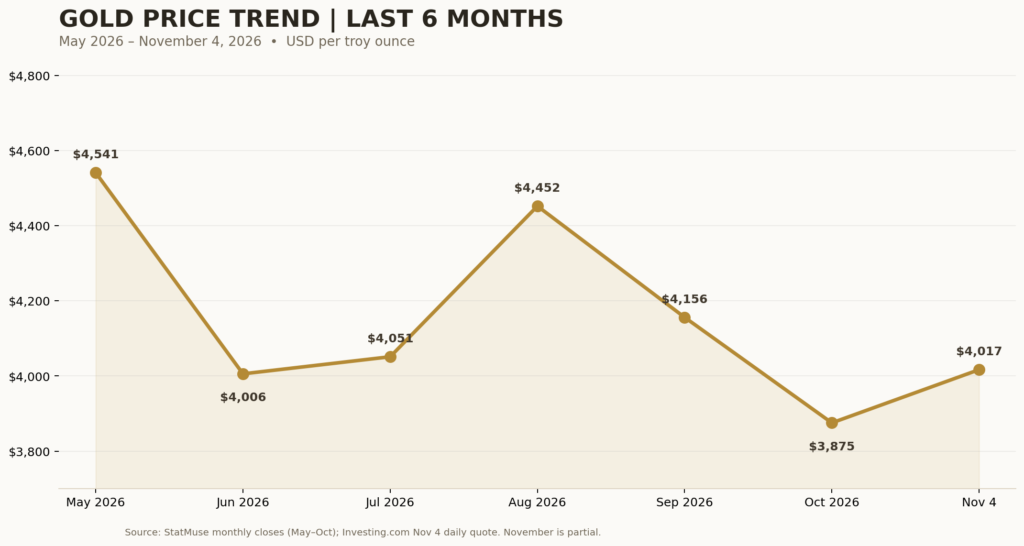
Reports from Reuters indicate that gold scaled an unprecedented peak near $5,595 per troy ounce in January 2026. However, as of November 3, spot prices dipped toward $3,927 per ounce, marking a sharp downturn of roughly 30% from its record high.
This market adjustment stems from rising US Treasury yields, a robust American dollar, evolving interest-rate projections, and diminished appetite among specific investor segments.
Nevertheless, a pull-back in bullion prices does not signal an end to consumer interest in fine jewelry or high-value materials. Rather, it reflects a strategic shift in how buyers and investors choose to distribute their capital across the market.
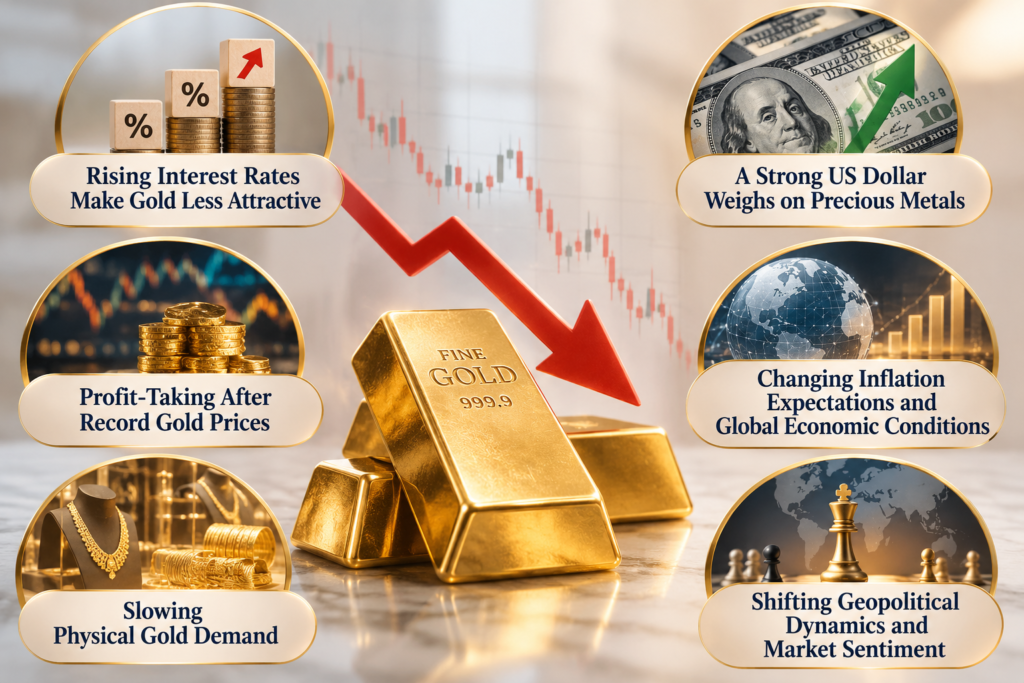
- Rising Interest Rates Make Gold Less Attractive
- A Strong US Dollar Weighs on Precious Metals
- Profit-Taking After Record Gold Prices
- Changing Inflation Expectations and Global Economic Conditions
- Slowing Physical Gold Demand
- Shifting Geopolitical Dynamics and Market Sentiment
What Do Falling Gold Prices Mean for the Jewelry Industry?
Gold price fluctuations have a direct impact on jewelry manufacturers, retailers, wholesalers, and consumers.
Gold represents a substantial portion of the material cost of many jewelry designs. When its price changes significantly, businesses must reconsider pricing, production planning, and inventory strategies.
The recent decline in gold prices reflects a combination of higher interest-rate expectations, a stronger US dollar, profit-taking, changing investor demand, and global economic uncertainty.
For the jewelry industry, these fluctuations create both challenges and opportunities.
Lower gold prices can potentially reduce manufacturing costs and improve affordability, while changing consumer preferences encourage jewelry brands to explore more distinctive designs.
Natural colored gemstones remain an important part of this evolving market, offering color, individuality, and creative flexibility.
At Navneet Gems & Minerals, we believe that successful jewelry collections are built through a combination of quality materials, precision manufacturing, and thoughtful design.
As the global jewelry market continues to evolve, our commitment remains focused on supplying natural colored gemstones that help jewelers and manufacturers bring their creative visions to life.
Explore our new productions of natural sapphires, rubies, emeralds, and other colored gemstones at www.navneetgems.com.
