
Why Most Montana Sapphires Never Makes It Into a Calibrated Gemstones
Date Created: 24th Aug,2026.
The Hidden Challenges Behind Precision-Cut Montana Sapphires
It’s a known fact that no gemstone manufacturer wanted to tip their toes into Montana Sapphire calibration manufacturing despite the surge in demand worldwide and in this article we will tell you why NGM wanted to bridge that gap in the market.
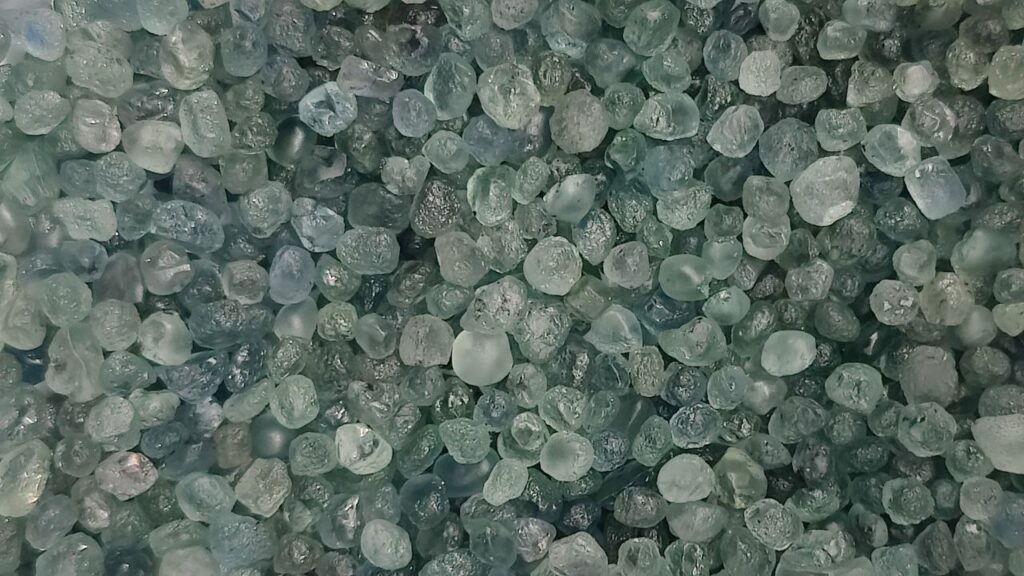
When you see a matching parcel, it’s easy to assume that the process is straightforward. After all, the gemstones are the same size, similar in color, and ready to be set into jewelry. What many don’t realize is that producing calibrated Montana sapphires is one of the most challenging tasks in gemstone manufacturing. Infact, a huge portion of the rough never makes it into the production. For gemstone manufacturers, the journey from rough sapphire to a calibrated gemstone involves countless decisions, compromises, and technical challenges that determine whether a stone becomes part of the selected rough—or is removed from production entirely.
What makes Montana Sapphire different?
These American gemstones are known for their unique colors, ethical origin and natural beauty. Montana sapphires has Teal blue tones, Green-blue hues, bi-color sapphires and pastel colors. These characteristics make them incredibly desirable for jewelry designers, but they also make calibration manufacturing significantly more difficult. No two pieces of rough behave exactly the same during manufacturing.
The Myth of “Just Cut It to Size”
Many people think that calibration simply means cutting a gemstone to a specific measurement but it’s far from reality. A manufacturer cannot simply take a piece of rough and decide to cut a perfect 6x4mm or 7x5mm sapphire.The rough itself determines what is possible. Before the process of cutting begins, we have to evaluate rough shape, color distribution, clarity, Inclusions, yield potential.
View this post on Instagram
More Challenges faced in Montana Sapphire manufacturing
- Color Zoning : Blue on one side whereas green on the other, dark saturation zones, light color pockets.
- Rough Shape limitations : too shallow, too elongated or unevenly proportioned
- Weight Loss : A rough sapphire may lose 50%, 60% or sometimes over 70%
The Growing Demand for Calibrated Montana Sapphires
Despite these obstacles, demand continues to rise.
Jewelry designers in the United States and United Kingdom increasingly seek calibrated Montana sapphires because they offer:
- Ethical sourcing
- Distinctive colors
- Alternative engagement ring options
- Consistent production capabilities
As brands move toward scalable collections, calibrated gemstones become essential.
View this post on Instagram
At Navneet Gems & Minerals, we work directly with rough partner and apply decades of manufacturing expertise to create calibrated Montana sapphire collections for wholesalers and designers worldwide. We cut everything at our own factories. Our focus is not simply producing gemstones. It is producing consistency.
From teal Montana sapphires to calibrated rounds, ovals, pears, and fancy cuts, every gemstone undergoes rigorous evaluation to ensure it meets our standards for color, precision, and quality. Because in gemstone manufacturing, the real challenge isn’t finding beautiful rough.It’s transforming that rough into a gemstone that works seamlessly for modern jewelry production. You can contact us on info@navneetgems.com or follow us on instagram @navneetgemscom.

